
A child may try to stay close to a suffering parent by sharing their pain, hiding personal needs, or becoming responsible for them. Carrying suffering and taking an adult role are distinct movements, although they can occur together. Family Constellations considers the love and loyalty beneath these connections and how they continue through guilt, overgiving, or difficulty turning toward one’s own relationships and life.
Introduction
Children love their parents deeply. When a parent is grieving, overwhelmed, lonely, or carrying something difficult, many children instinctively try to help.
A child may comfort the parent, try to reduce conflict, stay strong, hide their own needs, or begin taking care of others. These movements are rarely conscious choices. Out of love and a need to preserve their connection and belonging, the child may unconsciously agree to carry something for the parent. Unconsciously, the child may say:
"Better me than you."
They may begin feeling responsible for a parent's happiness, loneliness, suffering, family conflict, or for somehow keeping everyone together. Sometimes what the parent is experiencing is connected to their own difficult experiences or to losses, exclusions, traumatic events, or people from earlier generations. The child may then become entangled with something that began generations before them.
Many continue these patterns into adulthood.
Family Constellations offers one way of understanding how this love and loyalty can lead a child to carry what belongs to a parent, how the natural order between parent and child can become disturbed, and how these patterns may continue into adult life.
The key ideas come together in the visual map below, showing how a child's love and loyalty may lead them to carry what belongs to a parent, how this can continue into adulthood, and how greater order can allow the child to be free to turn toward their own life.
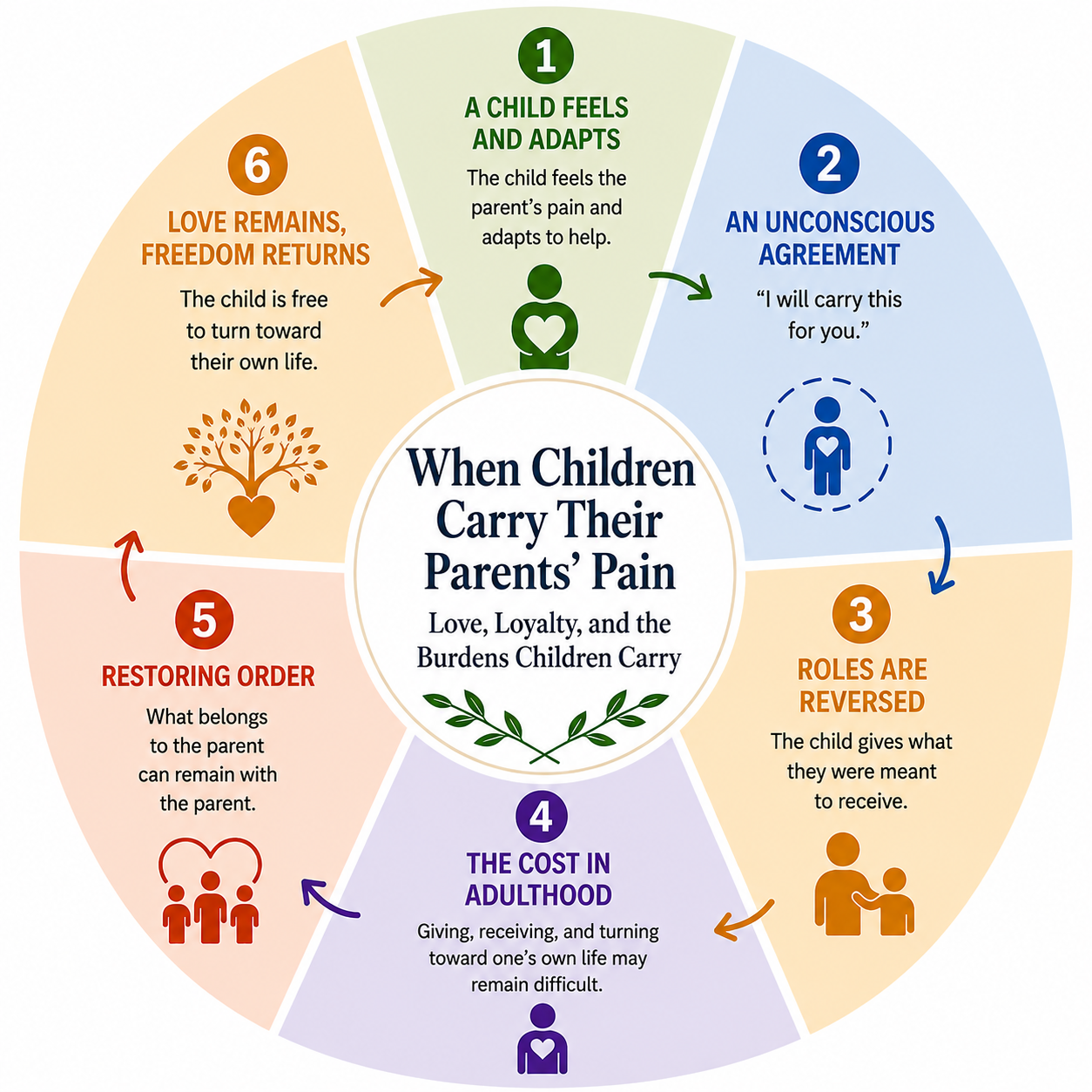
Children Feel More Than We Realize
Children often feel what is happening within their family long before they understand it. They may feel that a parent is grieving, afraid, burdened, distant, or struggling even when they do not know what has happened.
What affects the parent also affects the child's relationship with the parent. When the parent is struggling with something that limits their ability to receive the child, the child may continue reaching toward them and trying to help.
The child may become extra responsible, unusually helpful, quiet, or careful not to create additional problems. They may begin taking care of the parent or taking on responsibilities within the family that help them maintain their belonging.
Over time, this adaptation may include an unconscious agreement to carry something for the parent.
"I Will Carry This for You"
Family Constellations often observes an unconscious agreement that can occur within families.
A child may silently feel:
"I will carry this for you."
Or:
"I will help you with your pain."
Or:
"You should not have to suffer alone."
The child may also unconsciously say:
"Better me than you."
This adaptation arises from a child's deep love. In trying to help, the child may take on something that belongs to the parent, disturbing the natural order between parent and child.
What the parent is experiencing may be connected to their own loss or other difficult experiences, or to a loss, exclusion, traumatic event, guilt, or someone from an earlier generation. The child's unconscious agreement to help may then entangle them with something that began generations before them.
Carrying Pain and Parentification
Carrying a parent’s pain and parentification can occur together, but they describe different movements. A child carries pain through identification or entanglement with the parent’s suffering, burden, or fate. Parentification involves taking an adult responsibility or moving into a place that belongs to the parent or the parent’s partner.
A child may become the listener, peacemaker, caretaker, or confidant while also sharing the parent’s grief or loneliness. Attention turns toward what the parent needs, while the child’s own needs remain unanswered. Becoming helpful or needed can feel like the only available way to remain close.
Giving up that responsibility may feel like abandoning the parent. The pattern can continue into adulthood through overgiving, guilt about independence, or difficulty receiving care. Another child may carry the parent’s grief without becoming a caretaker or taking an adult position. Sharing suffering can itself become a way of preserving connection.
A constellation can distinguish the responsibility the child has assumed from the suffering they have become connected to. Both need recognition: what belongs to the parent, what the child did not receive, and how the child can remain connected through love while taking their own place.
The Fear of Adding to the Burden
Many children who carry a parent's pain become reluctant to bring their own difficulties to the parent.
They may think:
"Mom already has enough to deal with."
"Dad is under too much stress."
"I don't want to make things worse."
"My problems are not important."
The child may feel that there is already too much for the parent to manage. Instead of reaching toward the parent with their own needs, they may hold back, become less demanding, or try to make things easier for the parent.
In this situation, the child may give up receiving while continuing to give. The natural order between parent and child becomes reversed as the child tries to protect the parent rather than receiving what the parent has to give.
This can continue into adulthood. A person may continue handling difficulties alone and find it difficult to receive from others because receiving means leaving behind the way they learned to be with the parent.
When Being Needed Becomes the Child’s Place
A child who repeatedly helps a struggling parent may become known as the responsible one, the strong one, or the person everyone relies upon. Being needed brings recognition and a way of staying close. The child’s place within the family becomes connected to what they provide rather than what they receive.
Stopping can then feel like more than giving up a task. It may feel like abandoning the parent, withdrawing something the family depends upon, or losing the place through which the child has belonged. In adulthood, the person may continue helping, managing difficulties, or remaining strong even when exhausted or needing care themselves.
A constellation can bring attention to the relationship sustained through being needed. The person can recognize what they have given, what they hoped to receive, and which responsibilities belong to the adults. The movement is toward remaining the parent’s child and retaining their belonging without having to keep the parent or family functioning through their own effort.
Guilt, Loyalty, and Love
One of the reasons these patterns are difficult to change is because they are rooted in love and the child's need to preserve their connection and belonging with the parent and the family.
Many people feel that letting go of what they have taken on would mean abandoning the parent.
They may unconsciously believe:
"If I stop helping, I am disloyal."
"If I become happy, I leave them behind."
"If I focus on myself, I am selfish."
"I should suffer if they suffered."
The child may remain loyal by suffering as the parent suffered, giving up something in their own life, or becoming entangled with someone from an earlier generation whose suffering, loss, guilt, or exclusion has not been acknowledged within the family.
Continuing in this way can feel like staying with the parent or someone who came before. Letting go may feel like separating from them or leaving them alone with what happened.
From a systemic perspective, the child does not need to share the parent's burden or fate in order to be loved. What belongs to the parent can remain with them, and the child can be free to live their own life.
When the Earlier Position Continues in Adult Relationships
Sharing a parent’s suffering can keep an adult child turned toward what the parent carries. Happiness, partnership, or a different future may feel like leaving the parent behind. The person’s present circumstances may offer new possibilities while their loyalty remains with the earlier relationship.
Sometimes the adult child also remains in a place beside the parent that belongs to the parent’s partner. They may become the parent’s main companion, confidant, protector, or support. Even when they have a partner of their own, their attention and responsibility remain directed toward the parent, making it difficult to turn fully toward their partnership, children, and own life.
Moving from that position can feel like abandoning the parent or withdrawing the care through which they have stayed connected. A constellation can distinguish the adult role they assumed from the suffering they share. These movements can occur together, but each needs recognition.
The parent remains the parent, with their own relationships, responsibilities, and fate. The adult child can love and appropriately help them while returning to their place as the child and turning toward their own partner, children, and life.
Honoring Without Carrying
Movement toward healing begins with recognizing the suffering with which the child has become connected. A constellation can bring the parent’s loss, guilt, burden, or fate into view, along with the people and events to which it belongs. Where the connection reaches into earlier generations, those relationships also require acknowledgment.
The child’s attempt to help through shared suffering is recognized as a movement of love. When the suffering is allowed its original place and relationships, the child no longer has to live it for the parent. The parent remains the parent, with their own life and fate; the child remains their child.
Love, respect, and belonging can remain without sharing the suffering. The child can turn toward their own partner, children, and life without making continued pain the condition for staying connected.
Possible healing sentences include:
“I can love you without carrying your pain.”
“I can honor your struggles without living them for you.”
“I am your child, and you are the parent.”
About the Author
Barry Krost has been studying Family Constellations since 2003 and has over 40 years of experience in bodywork, somatic education, and systemic healing. He teaches Family Constellations internationally, mentors facilitators through his Training & Certification Program, and has presented at international systemic constellations conferences. His Resource Library reflects decades of professional experience and ongoing study, offering clear, thoughtful, and grounded education to help individuals and professionals better understand Family Constellations.
Explore Further
You may also be interested in:
Ready to explore how these dynamics may be affecting your own life?
Schedule a Complimentary Consultation to discuss whether Family Constellations may be right for you
Frequently Asked Questions
What does it mean to carry a parent's pain?
It refers to a child unconsciously agreeing to take on something that belongs to a parent. From a systemic perspective, the child may try to help by sharing in the parent's suffering or fate.
Why do children do this?
Children often respond out of love, loyalty, and the need to preserve their belonging with the parent and the family. Unconsciously, a child may say:
"Better me than you."
What is parentification?
Parentification occurs when a child takes on practical responsibilities or takes a position within the family that properly belongs to the parent. The natural order of giving and receiving can become reversed, with the child giving to the parent what they were meant to receive. Sometimes the child may even move beside the parent into the place that properly belongs to the parent's partner.
Is carrying a parent's pain always parentification?
No. Parentification is one way this pattern may develop. A child may also become entangled with a parent's suffering or fate without becoming their caretaker or taking on the responsibilities of the parent.
Can children become entangled with something from an earlier generation?
From a Family Constellations perspective, yes. What a parent is experiencing may be connected to losses, exclusions, traumatic events, guilt, or people from earlier generations. Through their love and loyalty to the parent, the child may become entangled with something that began generations before them.
Why can receiving from others become difficult?
When a child learns to give to the parent rather than receive from them, giving can become more familiar than receiving. This can continue into adulthood, making it difficult to receive help or allow others to give to them.
Can carrying a parent's pain affect adult relationships?
Yes. The adult child may continue giving more than they receive, taking care of others, or remaining turned toward the parent. Sometimes the parent continues to have a position in the adult child's life that properly belongs to a partner, limiting their ability to turn fully toward their partner, their children, and their own life.
Does leaving a parent's burden with them mean rejecting the parent?
No. The parent can have their own life, suffering, and fate while the child remains the child. Leaving with the parent what belongs to them does not require giving up love or belonging.
Can someone love a parent without sharing their suffering?
Yes. The child does not need to share the parent's suffering or fate in order to belong or to be loved. The parent can have what belongs to them, while the child is free to live their own life.
How can Family Constellations help with these patterns?
Family Constellations provides one way of exploring unconscious loyalties, entanglements, and the order between parent and child. A constellation may help make visible what the child has unconsciously agreed to, who or what it belongs to, and what may allow the child to leave it with those to whom it belongs and return to being the child.
